Focus
Part of Focus and interruption management
Identifying the main sources of avoidable interruptions
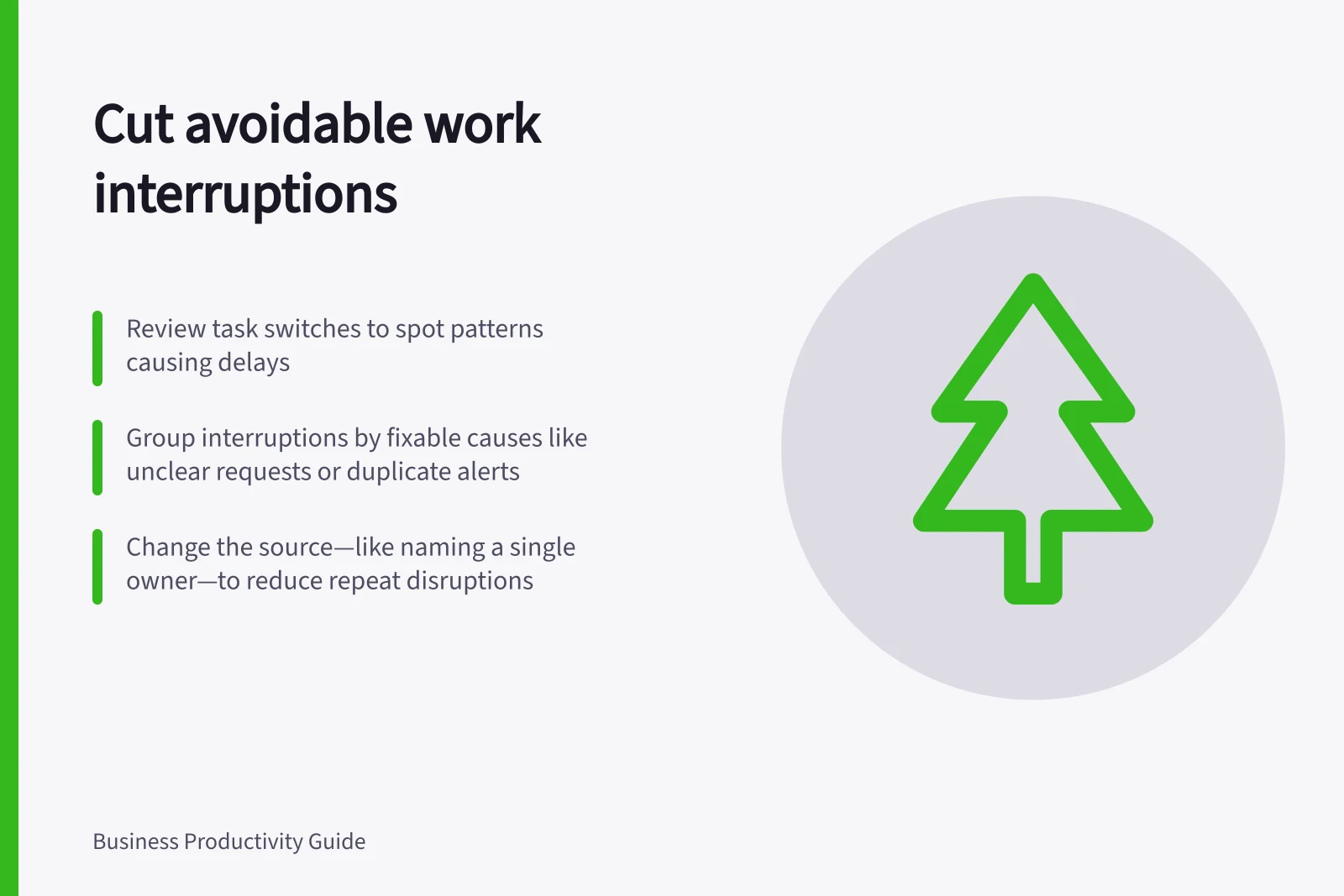
Trace interruptions to their causes with a brief work-level review, then choose a change that preserves necessary service.
To find avoidable interruptions, review a small sample of actual work. For each switch, ask what caused it, whether it needed attention then, and what would have happened if it had waited. Count patterns to locate a problem; never use an interruption tally to judge an individual's effort.
Define the interruption you are looking for
Choose a task that needs concentration, such as checking a report or preparing a customer proposal. For this review, record a switch away from that task before a natural stopping point. Include outside prompts, such as a call or colleague's question, and self-initiated checks, such as opening chat to see whether an answer arrived.
A necessary service call may still interrupt the task. Mark it as necessary rather than pretending it can be removed. The useful question is whether the contact reached the right person through the right route.
Keep a brief, work-level record
Agree on a short review period with the people involved and use the team's existing work record where possible. Do not capture message contents or monitor screens merely to build a count.
Record / Question it answers
- Work underway
- What result was being prepared?
- Prompt and route
- Was this a call, notification, walk-up question or self-check?
- Needed response
- Did it need action before the next ordinary review?
- Ownership
- Was the recipient the person able or assigned to respond?
- Return point
- What did the worker need to recover to continue?
Keep enough detail to understand the handover without recording private information irrelevant to the process. Ask workers which switches they found disruptive; two prompts of the same type may have different effects.
Group by cause you can change
Look beyond the channel. Several chat prompts might trace back to one unclear instruction. Repeated walk-up questions might mean colleagues cannot find the current answer. A person who keeps checking a service queue may be doing exactly what their role requires, or may lack a clear coverage handover.
Group examples into a few possible causes: unnecessary recipients; unclear requests that produce follow-up questions; missing information or decisions; duplicate alerts across channels; and essential demand reaching someone who is meant to be off coverage. Treat these as hypotheses. Check the relevant work item and speak with both sides before naming a cause.
Choose a fix at the source
For the largest avoidable pattern, change one part of the route. A repeated question may need a clearer instruction. A prompt sent to the whole team may need a named owner. A genuine live issue may need a coverage arrangement rather than fewer notifications.
Explain what will change, who could be affected and when the team will review it.
After the change, inspect comparable work. Are fewer people being interrupted for that reason? Can the requester still get the answer they need? Has the burden moved to the person covering the queue?
If the record reveals demand that regularly exceeds available cover, take that workload question to the people who can change it.