Focus
Part of Productivity for managers
Reviewing progress without constant status requests
Use a shared work record, proportionate checkpoints and clear exception rules to review progress without repeated status chasing.
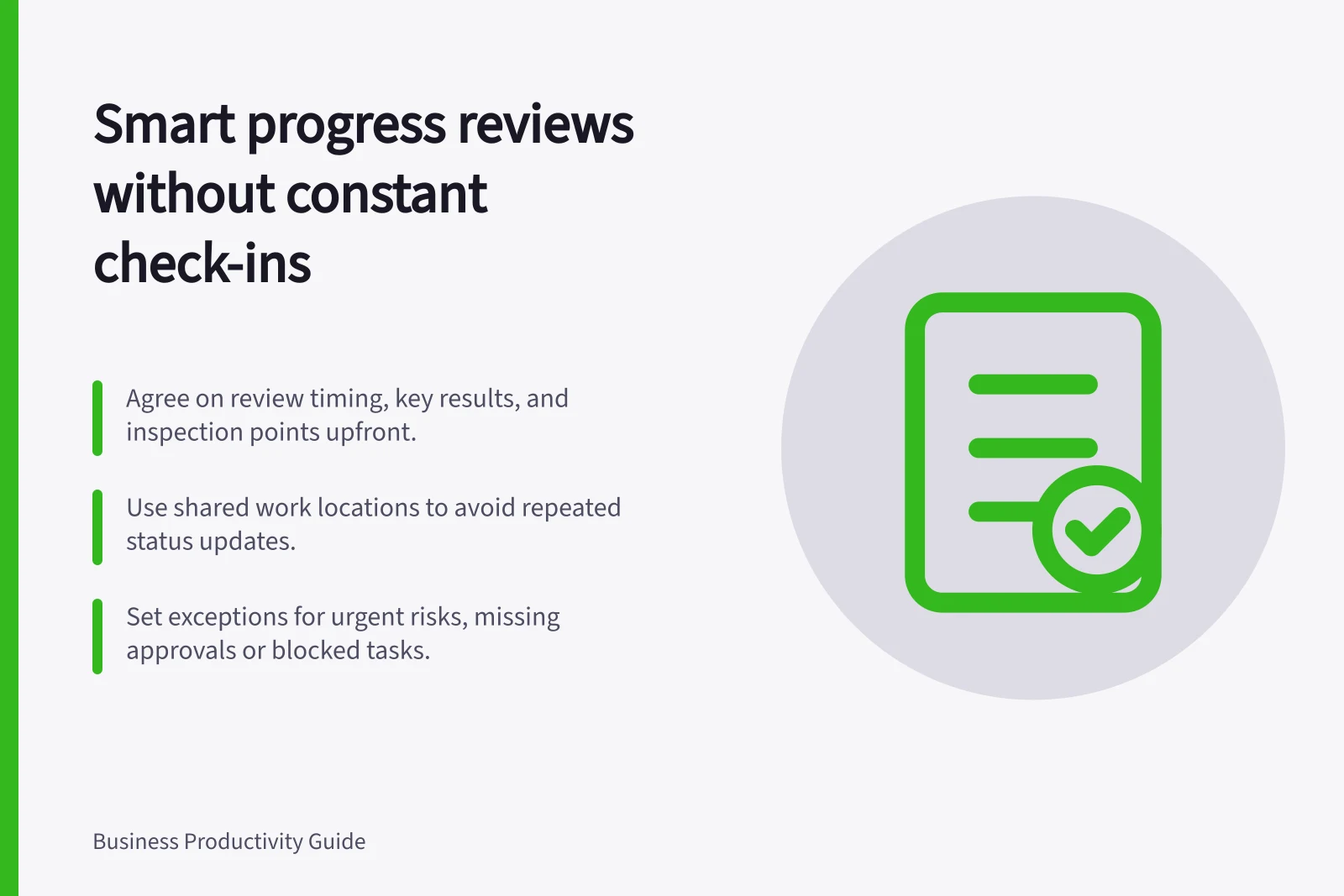
Agree where to inspect current work, what next result matters, and when you will review it. Ask to hear sooner if a risk, dependency or needed decision changes the plan. This gives a manager current information without asking each person for status repeatedly.
Inspect evidence that fits the work
For a deliverable, inspect its current draft, work item or handover. Ask what the intended recipient can use now, what remains open and which assumption could change the result. A status label can help you scan work, but inspect the work behind it before making a decision.
Use an agreed location for the current position. Avoid asking the owner to recreate the same update for several readers. Where access is restricted or the matter is sensitive, use a suitable record and share only what the reviewer needs.
Set checkpoints and exceptions
Match the checkpoint to the work's duration, risk and handovers. A short task might need only a handover and final review; a longer deliverable may need an early direction check. Agree when the manager should hear sooner, such as a deadline at risk, a missing approval or an obstacle the owner cannot clear.
Atlassian's weekly project-update play suggests covering accomplishments, needed input and next focus. Its weekly timing is a suggested practice, not a standard for every team. Use the interval that suits the work and service duties.
At each review, establish the result reached, the next reviewable result, any changed promise and the help or decision needed. Ask for the latest useful answer time when your decision affects the next step.
Use the conversation to help
If work is waiting, identify what it is waiting for and who owns the next move. If the plan no longer fits, discuss scope, timing or cover. A more reassuring status label will not settle that choice.
Leave a private route for workload concerns, conflict and personal feedback. A quiet shared record does not establish that everyone is able to proceed. Ask whether the review gives people timely help and whether those relying on the work can see enough to act. Remove duplicate updates while keeping conversations that resolve work or support people.