Meetings
Part of Decision efficiency
Recording the decision a discussion needs
A meeting can be full of useful facts and still end without progress because nobody stated the choice to be made.
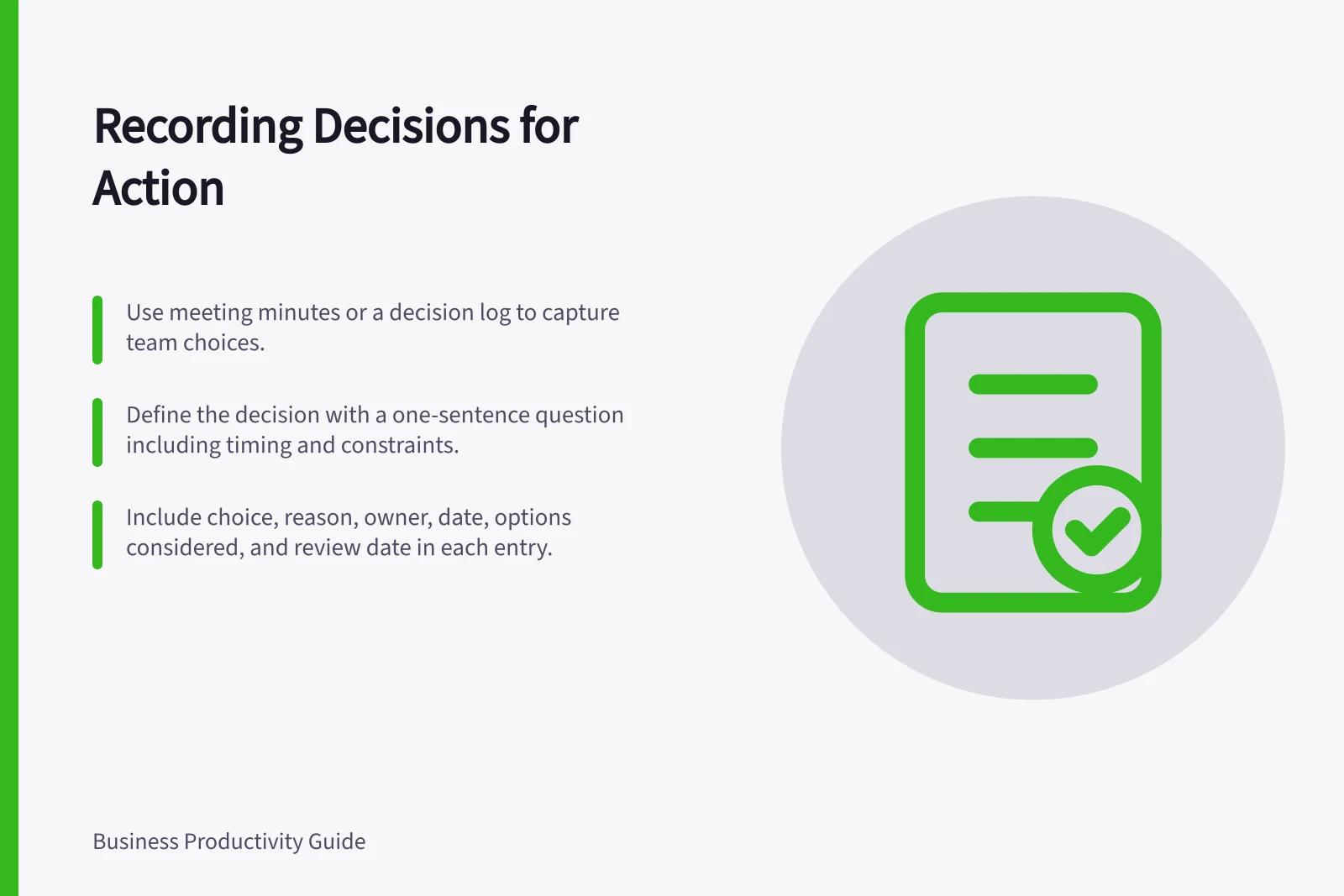
Useful discussion only becomes a decision people can act on when its outcome is written down somewhere the team can find. Use meeting minutes as the shared meeting record, or keep a decision log for choices that need a traceable history.
Use a one-sentence question
Identify the object, options or decision boundary, and timing. “Should the new returns workflow launch to all stores in October or to one region first?” gives a team something to evaluate.
“Talk about returns” does not. State who will decide and why the choice is needed now; Atlassian’s DACI guidance calls the decision-maker the Approver and provides a template for summarising and sharing decisions.
List constraints such as budget, deadline, legal requirement, staffing or dependencies, and distinguish fixed constraints from preferences. If there are no real alternatives yet, the first decision may be what evidence to gather, not which solution to choose.
Define what good enough means
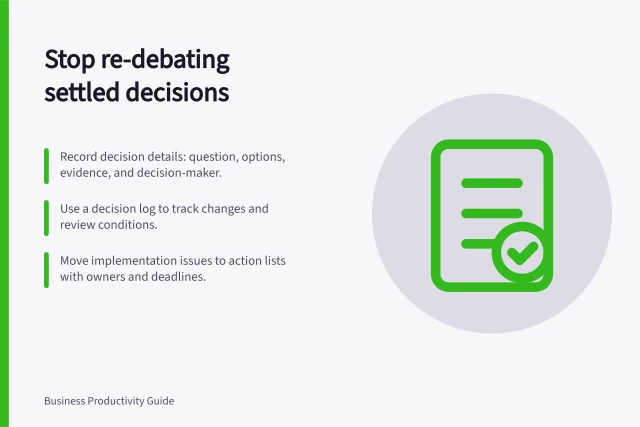
Choose a format the team will maintain: meeting minutes or a decision log. For each decision, state the choice, reason, owner and date; add context, options considered, expected impact, follow-up actions, status and a review date where relevant.
Example: Date decided: 2026-09-24; decision title: Approve vendor security review before renewal; context: renewal is due in 30 days and the vendor now handles customer data; options: renew now, pause renewal, or renew after security review; decision: renew only after security review. The entry captures the stated choice and the context needed to understand it later.
Give each log entry a short unique reference, a clear title and its date, and use the same fields consistently. A spreadsheet, document, database, project workspace or workflow system can hold the log; consistent fields make entries easier to search and compare.
For formal minutes, the chair or a designated secretary typically records them, and the chair approves them before distribution; in less formal teams, the role can rotate. Capture the decision during the meeting or immediately after, while the details are fresh.
Share the approved record with the team, including attendees and absentees, so everyone can refer to the same decision. Keep the written outcome concise rather than turning it into a word-for-word account of the discussion.
At the meeting’s end, restate the outcome as a choice, reason, owner and date, and mark its status. If no decision was made, state precisely what remains open and who will resolve it; include a review date when one is needed.