Meetings
Part of Decision efficiency
Choosing who must contribute and who only needs an update
Including everyone in a decision can slow it without improving it.
Including everyone can slow a decision without improving it. Excluding a person with essential knowledge can create rework. Separate the people who decide, those who supply expertise and those who only need to know the result.
Map roles to the choice
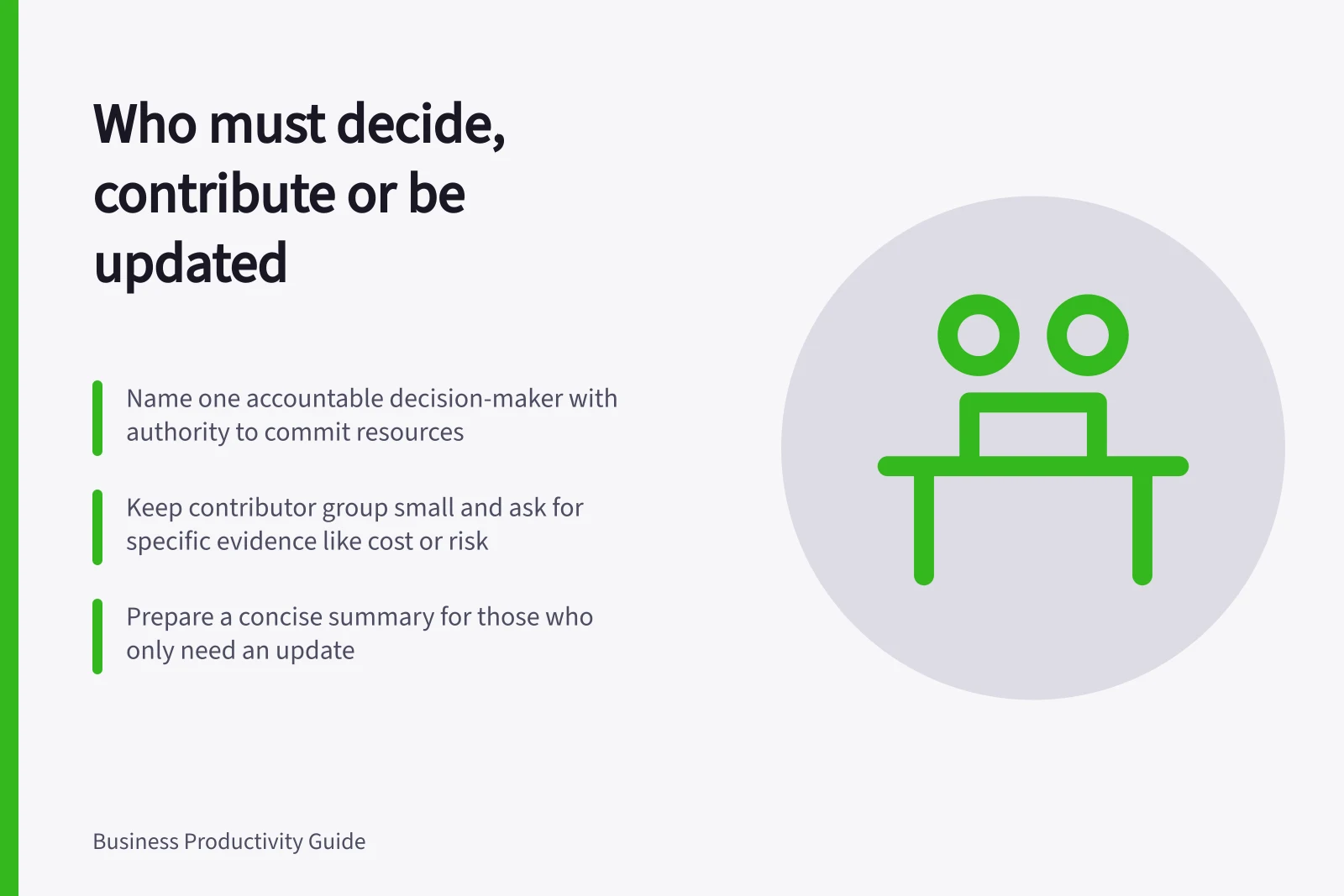
Name one accountable decision-maker with authority to commit resources. Name a driver to gather input and keep the deadline. Ask contributors for specific evidence: implementation cost, customer impact, security requirement or operational risk. Atlassian's DACI framework distinguishes Driver, Approver, Contributors and Informed; the last group is affected by the outcome but does not need to vote on it.
Keep the contributor group small enough to work. Consult additional specialists only on the aspect they know. Tell contributors how their input will be used and when it is due. Consultation does not mean every suggestion will be adopted.
For people who need an update, prepare a concise decision summary with effect on their work and any action required.
Applying the DACI Framework in Australian Business Meetings
- DriverCoordinates input, manages timeline, and ensures deadlines are met. Typically a project manager or team lead.
- Approver (Accountable)Has final authority to commit resources. Must be formally empowered by organisational policy or governance structure.
- ContributorsProvide expertise, evidence, or analysis (e.g., cost estimates, compliance risks). Limited to those with relevant knowledge.
- InformedNeeds to know the outcome but does not contribute or vote. Includes stakeholders affected by the decision.
Check for hidden authority
A formal approver may not be able to act without a budget owner, regulator or customer agreeing. Identify those constraints early. Similarly, a person labelled “informed” may actually control a system essential to implementation. Revisit roles if the decision boundary changes.
Afterwards, ask whether a missing voice caused a late objection or whether a participant sat through a discussion they did not need. Use that feedback to improve the next decision.