Meetings
Part of Reducing rework
Reviewing feedback that arrives too late
Triage late review comments, make scope and deadline trade-offs explicit, and set an earlier review point for the next deliverable.
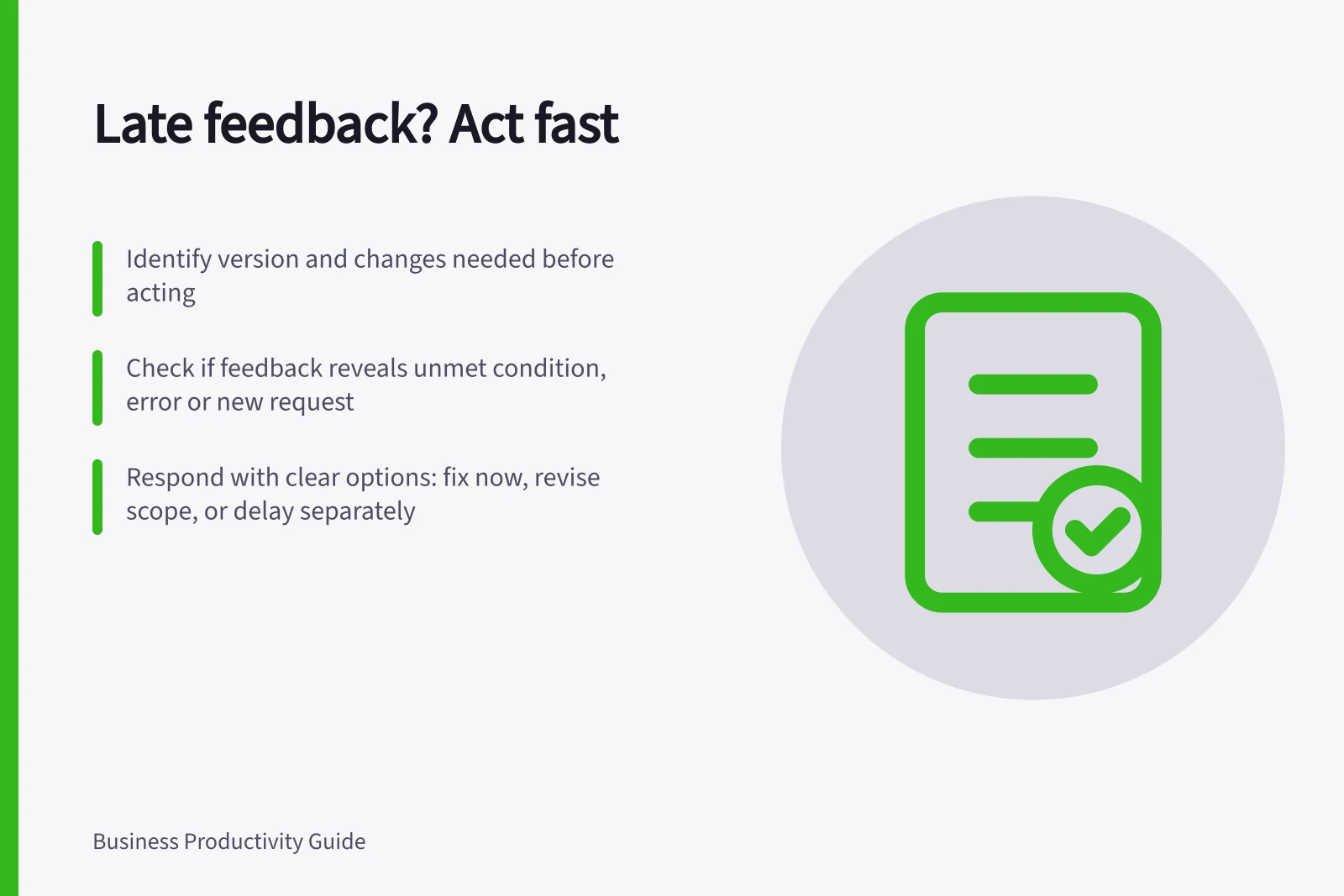
When feedback arrives after substantial work is complete, identify the version it concerns and what it would change. Check whether it reveals an unmet agreed condition, a material error or risk, or a new request. Then agree a response: correct the current work, revise scope or date, or schedule the new request separately. Do not absorb every late comment into the original deadline without a decision.
Establish what the reviewer saw
Ask which version the reviewer used and which part the comment concerns. Compare that with the brief, completion criteria and earlier decisions. A comment on an older draft may already be resolved. A concern about the whole direction may need a different decision-maker from a wording edit.
Describe the issue neutrally: “The reviewer wants an additional region in the report” is easier to assess than blaming them for changing their mind. Note when feedback was requested, when it arrived, and whether the reviewer had the context needed to respond. Use that record to improve the review route.
Triage before revising
- Is an agreed condition unmet, or is there a material error or risk?Identify what must be addressed, who will decide the response and whether hand-off must change. A material concern still needs assessment after the review window closes.
- Does the comment change the audience, scope or direction?Show the decision-maker what must be redone, what can be retained and the likely effect on timing.
- Is it a new preference that can wait?Record it for later work and confirm whether the present deliverable can close against its current criteria.
These questions support a decision; they do not dismiss a valid concern. If the deadline is fixed, the decision-maker may need to reduce scope or approve an interim version.
A useful response states the choice plainly: “The regional breakdown was outside the agreed brief. We can add it with a revised hand-off date, or deliver the agreed report on schedule and plan the breakdown separately. Please confirm which you prefer.”
Move the next review earlier
After resolving the immediate issue, ask what earlier item would have revealed the concern: an outline, sample page, data extract or short demonstration. Give the relevant reviewer a specific question and a realistic response date while the direction can still change.
Check that the person with approval authority was identified at the start. Decide in advance what happens if they cannot review in time. Silence should count as approval of a consequential choice only if that rule was explicitly agreed.