Async Work
Part of Asynchronous work habits
Writing an update that does not require a follow-up meeting
An effective update answers what happened, what it changes and what the reader must do. Write for someone who has not followed every message in the project channel.
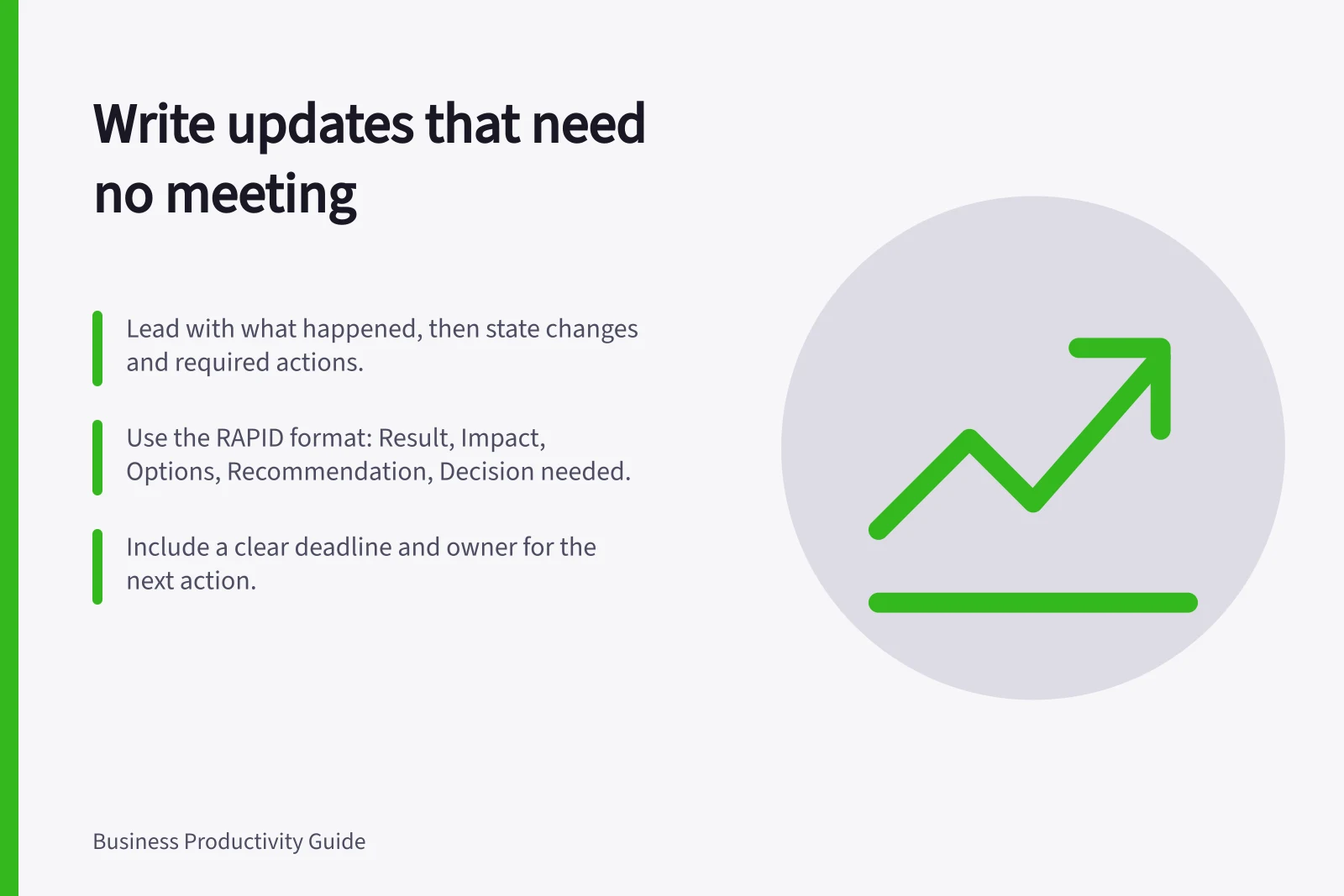
Lead with what happened, then state what changes and what you need from the reader. Aim for a reply that can be an acknowledgement, a decision or an answer to one precise question—not a request to explain the update in a meeting.
Copy and edit: Result — [what happened]; Impact — [effect on the milestone]; Options — [alternatives considered]; Recommendation — [preferred option]; Decision needed — [specific question] by [deadline]; Owner/action — [name] will [next action]; Work record — [Confluence page or Jira work item link]; Version — [version being discussed].
For example, open with: “The supplier cannot deliver the approved component this week.” Then fill in the milestone impact, alternatives, recommendation, decision deadline and next-action owner using the project’s actual details.
Ask a specific question the reader can answer asynchronously, and give the deadline the decision needs. If no action is needed, say so; do not leave the reader guessing whether a reply is expected.
Keep supporting detail in the project record rather than a long, unstructured chat message. Atlassian describes Jira and Confluence as keeping work and decisions visible; use a Confluence page or Jira work item as the reference point and link to it.
Before sending, check that the reader can state the current position and respond with a decision or a precise question. If several people keep asking for the same missing detail, revise the update template rather than scheduling a standing meeting to explain it.
Atlassian’s “Async Collaboration with the Atlassian Teamwork Collection” says status updates can be recorded and watched later. It says meetings are useful when interaction is the point, such as brainstorming, sensitive feedback or decisions that require real debate.
Writing an Asynchronous Update That Doesn’t Require a Follow-Up Meeting
- Lead with what happenede.g., 'The supplier cannot deliver the approved component this week.'
- State the impact on the milestonee.g., 'This delays the prototype build by two days.'
- Recommend a preferred optione.g., 'Recommend using Supplier B with expedited shipping to meet deadline.'
- Assign owner and next actione.g., 'Sarah will confirm order by EOD Thursday.'