Meetings
Part of Work process experiments
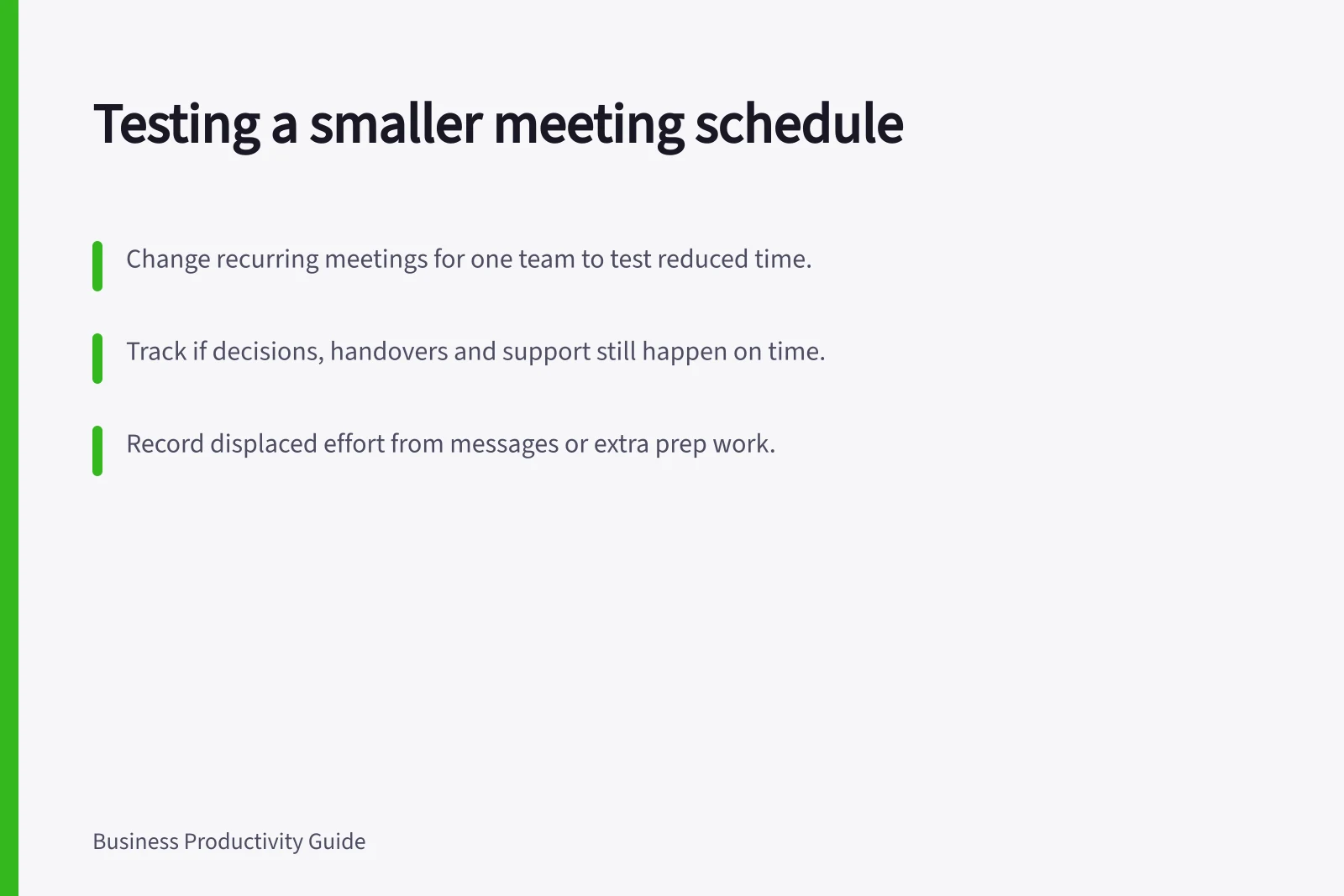
Testing a smaller meeting schedule
Trial fewer or shorter recurring meetings while checking decisions, handovers, support and work shifted into messages.
To test a smaller meeting schedule, change a defined set of recurring bookings for a limited period and check whether their work still gets done. Count the time released, but also check decisions, handovers, support and any work shifted into messages or preparation. A quieter calendar alone cannot show that the change helped.
Choose the bookings in scope
Start with one team and recurring meetings whose purpose and participants are known. Ask what each session is expected to provide and who relies on it.
Keep a live discussion when it serves a necessary decision, sensitive conversation or support need. Do not cancel a required review without an approved way to complete it.
Choose one change participants can follow: for example, hold a particular planning meeting fortnightly, or shorten it and agree how questions will be handled between sessions. Say which bookings are included, which are excluded and when the ordinary schedule will resume unless a further decision is made.
If a cancelled session provided a handover, give that handover an owner and a location. Explain how to raise an issue that cannot wait for the next meeting. Ask those who prepare, attend and use the meeting’s result how the proposed arrangement may affect them.
Record a starting point
Inspect recent comparable sessions. Note their booked time, the result each was meant to provide and whether it reached the people who needed it.
Ask participants about material preparation and follow-up work without creating a detailed timesheet. Note unusual deadlines or absences.
During the trial, use the same questions. Add replacement updates, follow-up calls and decisions that waited. Time removed from the calendar is a gain only if the work still gets done without an unacceptable burden elsewhere.
| What to check | Question |
|---|---|
| Released time | Which bookings disappeared or became shorter? |
| Required result | Was the decision, handover or support available when needed? |
| Displaced effort | Who wrote, read or chased replacement information? |
| Missed issue | Was anything found later than it would have been under the earlier schedule? |
Decide on the schedule
At the agreed review, inspect the work and ask participants and recipients what changed. Keep the smaller schedule if the meetings’ purposes are still met without a material burden elsewhere.
Restore or revise a booking if decisions wait, essential support is lost or the replacement route demands too much from another role. A mixed result may call for a shorter live decision session alongside a written status update.
Record which arrangement now applies, who owns its handovers and when it will be reconsidered.