Prioritisation
Part of Personal work planning
Turning a large deliverable into manageable next actions
Define a deliverable, divide it into checkable parts, identify next actions and dependencies, and check that the parts produce the agreed result.
To make a large deliverable actionable, name the finished result, divide it into parts you can check, then identify the first concrete action for each part. Keep the parts connected to the result. A long list of small tasks can still miss an input or review needed to make the deliverable usable.
Define the deliverable
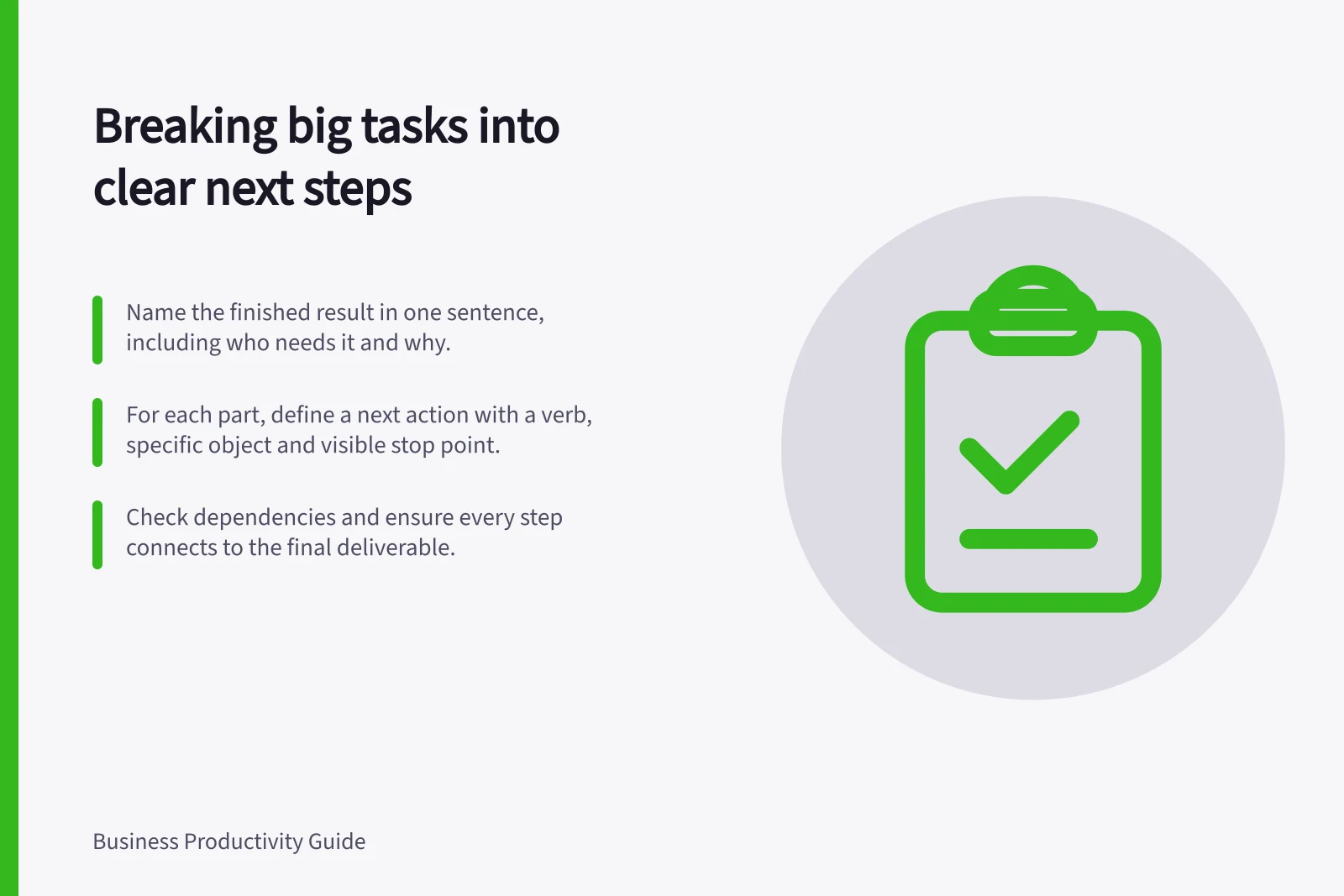
Write one sentence naming what will be produced, who needs it and what they will use it for. For a hypothetical staff induction guide: ‘A current guide to the agreed first-week process, ready for the service lead to review.’
Confirm unclear scope with the requester before building a detailed task list. Separate what is required now from ideas for a later version.
Name the main parts as results, such as a confirmed outline, checked process steps, reviewed examples and an assembled guide. Include less visible work such as obtaining source material, resolving conflicting instructions and allowing time for review.
Turn parts into actions
For each part, ask what must be in place before it can be completed and what you can do now. Give the next action a verb, a specific object and a visible stopping point. ‘Ask the service lead which handover process is current’ gives you a first move; ‘Sort out the guide’ does not.
| Part | Next action | Waiting or review point |
|---|---|---|
| Confirmed process | Compare the current guide with the approved process record | Ask the process owner about any conflict |
| Usable example | Draft one example from an agreed scenario | Ask someone who handles the work to check it |
| Reviewable guide | Assemble the checked sections into one draft | Send the current version to the named reviewer |
This is an illustrative breakdown. Stop dividing a part when its next action is clear enough to start. Add detail later as the work becomes clearer.
If a part remains too broad to assign or assess, divide that part further.
Effective vs. ineffective next actions
- Effective next action
- Ask the service lead which handover process is current
- Ineffective next action
- Sort out the guide
Check the order and dependencies
Separate work you can start now from work that needs an answer or review. Two independent sections may proceed together; a decision on the outline may need to come before extensive drafting. For a waiting item, record who owes the input and when you will check again.
If a decision is outside your authority, send the decision-maker a specific question. Do not treat a proposed assumption as an approved requirement. If the answer changes the size of the deliverable, revise the breakdown before making a new promise.
Check that the parts add up
Read the breakdown from the recipient's perspective. If every action were completed, would they have the agreed result? Look for missing inputs, handovers, checks and reviews. Remove work with no connection to that result.
When the work changes, revise the affected part. Keep the next action visible and use the deliverable to judge progress.