Team Workload
Part of Team workload visibility
Rebalancing work after an unexpected absence
Triage live duties, arrange qualified cover, revise affected promises and protect privacy when a colleague is unexpectedly absent.
An unexpected absence can leave live work, deadlines and service expectations exposed.
Use current records and a short review cycle to keep urgent work visible while decisions are made.
Establish what needs attention
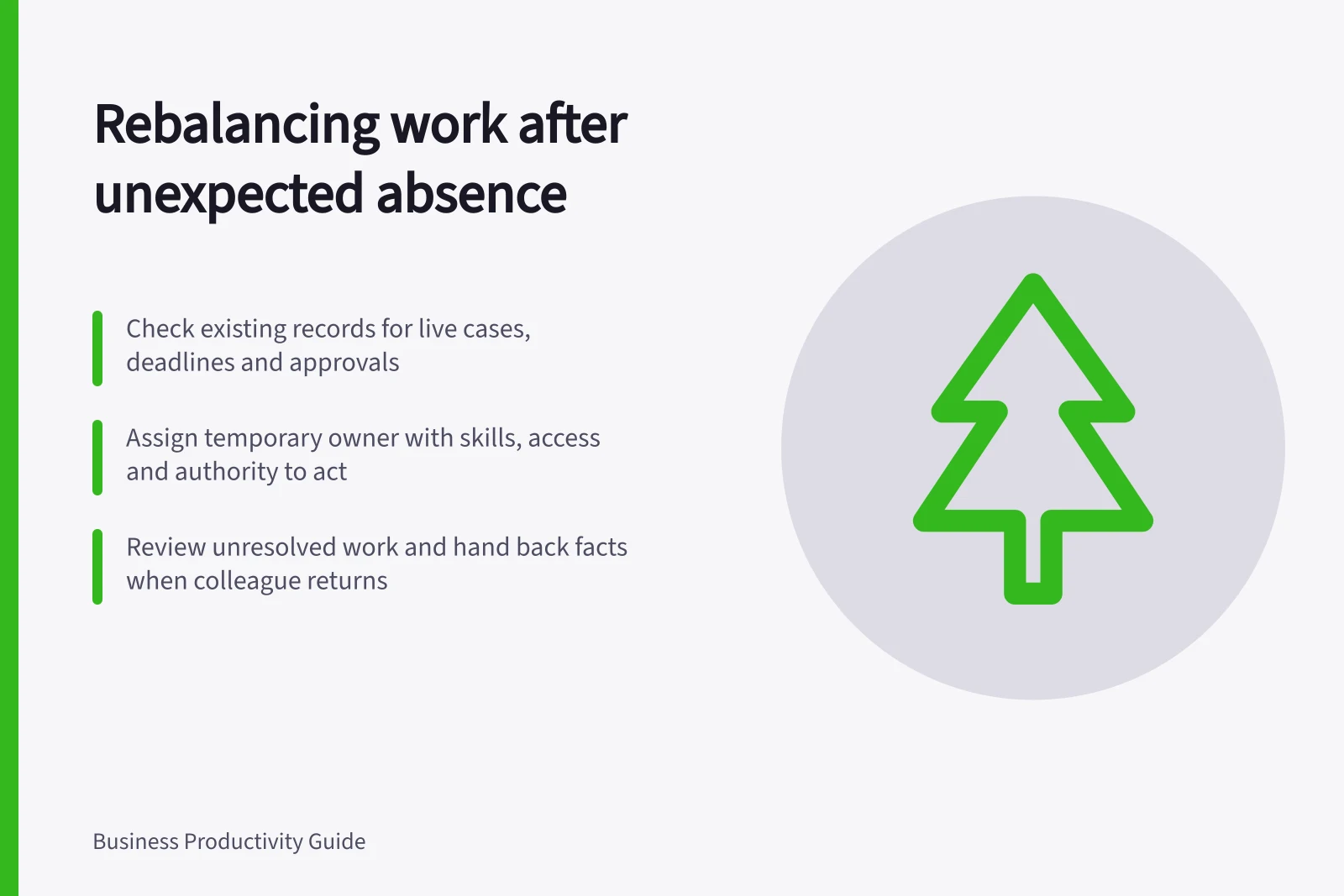
Check existing work and service records for live cases, promised responses, upcoming deadlines and approvals. Ask colleagues who share those workflows what may be missing.
Separate work needing cover now, commitments needing a decision soon and work that can wait until the next review.
For each item needing action, identify the next useful result and where its current material lives.
If access is missing, use the organisation's approved access and escalation process; do not use someone else's account.
Workplace Privacy and Mental Health Guidelines
- Fair Work Australia - Workplace Privacy
- Guidelines on handling personal information in work contexts
- Safe Work Australia - Psychosocial Hazards
- Managing job demands and mental health in the workplace
Arrange cover the recipient can rely on
Choose a temporary owner with the skills, access, authority and room to act. Confirm the handover with that person.
Someone may be able to acknowledge a customer enquiry but unable to approve the final response; name both steps.
| Work state | Immediate response |
|---|---|
| Live duty with a response expectation | Name the person on cover, open cases and fallback contact. |
| Deliverable due soon | Check what is usable, what remains and who may change its date or scope. |
| Work safe to pause | Record the pause and next review point. |
A safety or live service issue should follow the organisation's established response route.
Change commitments openly
Compare new cover duties with each covering person's existing work.
If promises no longer fit, take the choice to whoever can change them. Tell affected customers or colleagues what to expect and when they will hear more.
Keep the message about the work rather than speculating about the absent person's circumstances.
Colleagues planning cover generally need availability and hand-off information, not a medical explanation.
Follow the workplace's privacy arrangements; applicable privacy rules depend on the employer and how information is used.
Review and hand back
If the return date is uncertain, set a near-term review.
Check unresolved cases, the covering team's workload, changed dates and decisions that remain open.
If cover places unreasonable demands on others, change commitments with the authorised owner.
When the colleague returns, give a factual handback: what moved, what was completed, which decisions were made and what remains open.
Handle personal leave matters through the appropriate restricted process.